

Windows · Leeds
Double glazing in Leeds.
Modern sealed units that keep the heat on your side of the glass – fitted across Leeds by our own team, with honest advice instead of a hard sell.
- CERTASS certified – reg. 19‑1239
- 10-year guarantee
- James – 20+ years on the tools
Warmer home, quieter rooms
Good double glazing is a straightforward upgrade a cold house feels straight away. New sealed units hold the warmth in and take the edge off traffic noise. We'll talk you through the options in plain English and tell you straight what's worth doing – and what isn't. Every job carries our 10-year guarantee.
Can you replace just the glass unit?
Yes – where the frames are sound, we swap the sealed unit, not the window. Condensation between the panes means the seal has gone, and often that's a repair rather than a full replacement. We'll tell you plainly which yours needs – and if the cheaper fix is the right one, that's the one we'll quote for. There's more on our repairs page if that sounds like yours.
Fitted properly, first time
We fit every job with our own skilled team – not subcontractors. James, the owner, is a tradesman with more than twenty years on the tools, and he leads a small team of our own fitters: the people who measure up are the people who stand behind the work. We're family-run, based in Lower Wortley – no showroom, no call centre, no sales patter. And we're CERTASS certified (registration 19-1239), so your installation is registered and self-certified to Building Regulations – nothing for you to chase with the council.
What does it cost?
Every opening is different, so we don't do list prices. We come and measure, then give you an honest written figure – no pressure, no chasing phone calls afterwards. Want to spread the cost? Finance is available.
Where we work
Based in Lower Wortley (LS12) and fitting across Leeds – Pudsey, Bramley, Armley, Kirkstall, Horsforth, Farsley, Stanningley, Calverley and Morley included.
"The team worked hard and efficiently with minimal disruption."
The questions we hear most
What is double glazing?
Double glazing is two panes of glass sealed around a spacer bar, with an insulating gap between them that slows heat escaping through the window. Wortley Windows & Doors fits these sealed units in homes across Leeds – measured, made to size and installed by our own fitters, not subcontractors. It's the plainest upgrade there is: same opening, same style if you want it, far less heat lost through the glass.
How can I tell my double glazing has failed?
Misting between the panes is the surest sign your double glazing has failed – condensation trapped inside the unit, where you can't wipe it, means the seal has gone. Frames cold to the touch, draughts round the opening and windows that rattle in the wind are worth a look too. A single failed unit is often a repair; if several have gone at once, replacement double glazing may be the better call – we'll tell you which, straight.
Will it cut the traffic noise?
It will take the edge off it. A sealed double-glazed unit puts two panes of glass and a cushion of still air between you and the road, and that gap deadens sound as well as holding warmth. We won't promise silence – no window can – but for homes near the busier roads through LS12 and across Leeds, the difference is real, and you notice it most in the rooms you sleep in. If noise is the reason you're asking, say so when we come to measure – it helps us point you at the right unit.
"James was excellent – his knowledge, professionalism and skill set."
Which side of the glass is the water on?
That one question tells you whether the window has failed or the room is damp. Wipe the glass. If the water clears off the inside face, that is condensation out of the air in the room and the window has done nothing wrong. If it clears off the outside face on a cold morning, that is dew sitting on cold glass, and it means the heat is staying in the house rather than warming the street. If it will not wipe away from either side, the mist is sealed inside the unit and the glazing has failed.
Here is why it will not wipe. A sealed unit is two panes bonded around a spacer bar, and inside that spacer sits a drying agent that mops up the small amount of moisture sealed in with it. Warm days and cold nights flex the edge seal a little at a time, and blocked drainage holes leave the bottom edge of the unit standing in water. Eventually the seal lets go, the drying agent gives up, and damp air gets into the cavity. The mist is on the inside faces of the glass, where no cloth reaches.
Room-side condensation is a different job altogether. That one is about moisture in the air and where it can get out, so it shows up worst on cold mornings in kitchens, bathrooms and bedrooms, and a new window on its own will not settle it. A failed unit is the opposite: the frame underneath is usually sound, so it is the sealed unit that gets swapped, not the window. Our repairs page goes through what happens next.
- Room-side moisture
- Mist between panes
- Outside dew
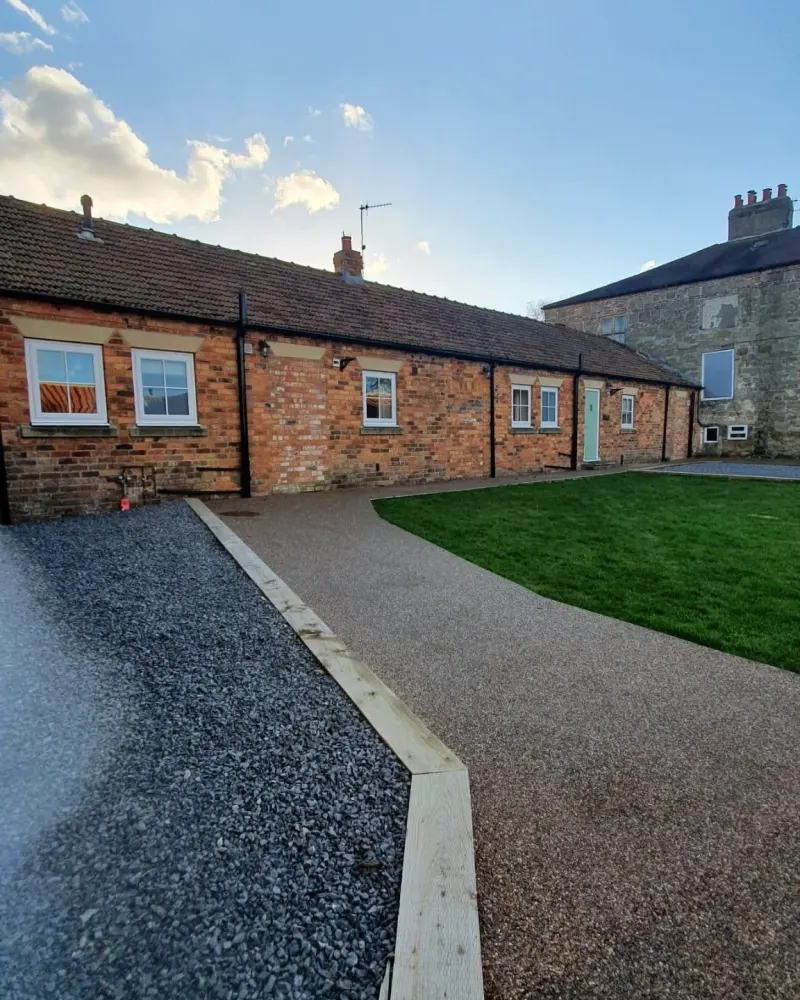
Cold mornings stay on the other side of the glass.
Condensation on the wrong side tells you something.
Is triple glazing worth it?
It depends on what is coming out. Triple glazing adds a third pane and a second gap, so heat has one more layer to cross on its way out of the room. The step that does most of the work, though, is the one from single glazing or a blown unit up to a sound modern double-glazed one. That is where the draughts stop and the cold spot by the window goes. Going from good double glazing to triple is a smaller step on top of a change you have already made, and how much it gains you depends entirely on your starting point.
The Building Regulations set one bar for a replacement window in an existing home, and it is one test or the other, not both: a whole-window U-value of 1.4 W/(m²·K) or better, or a Window Energy Rating of Band B or better. Whole window, frame and glass together. A figure for the middle of the pane does not count. Every replacement has to clear that bar whatever the pane count, so triple is not what makes a window compliant. Ask any installer which of the two tests they are quoting to, and ask for it in writing.
So treat triple as a decision, not an upgrade you are supposed to want. Replacing single glazing or misted units? The first step is already doing most of the work. Weighing up triple against sound double glazing purely for warmth? Be straight with yourself about how much further you are actually going, and about the rest of the house, because a window can only fix what is leaving through the window. Tell us what you are weighing up when we come and measure, and you will get a straight answer instead of a sales pitch.
What the Building Regulations certificate actually covers
It covers the whole window, frame included, because that is what counts as building work. Replacing a complete unit has to meet the rules on heat loss and ventilation, and on safety where the glazing sits low down. Because we are CERTASS registered we self-certify the job, and the scheme tells the council for you. The certificate that follows is the document your solicitor asks for when you sell, and the one a mortgage lender may want to see. Keep it with the house paperwork. It is proof the work met the standard, not a receipt.
A glass-only change is not the same thing. When we swap a misted sealed unit and leave the frame where it is, that is not a controlled fitting, the replacement energy rules do not apply to it, and no certificate is issued. That is what the regulation says, not a corner being cut. It catches people out years later when they find paperwork for one job and nothing for the other, so it is worth knowing which of the two you had done. If you are unsure, ask before the work starts rather than after.
| Feature | Whole window | Glass only |
|---|---|---|
| Counts as building work | Yes | No |
| Has to meet the replacement energy standard | Yes | No |
| Registered with the council through CERTASS | Yes | No |
| You get a Building Regulations certificate | Yes | No |
| The existing frame stays put | No | Yes |
Have a look at
Before you choose
Warmth held in. Noise taken off. Nothing oversold.
- Glass only, where the frames are sound We swap the sealed unit, not the window
- The certificate covers the whole window Frame included, not the glass alone
- 10-year guarantee Carried by every job
Ready to keep the warmth in?
- CERTASS certified – reg. 19‑1239
- 10-year guarantee
- James – 20+ years on the tools